Buying Guide · 8 min read
A buying guide to cashmere
Grade, gauge, ply and micron — the four numbers that tell you whether a sweater will last.
Ines Carvalho · January 5, 2026
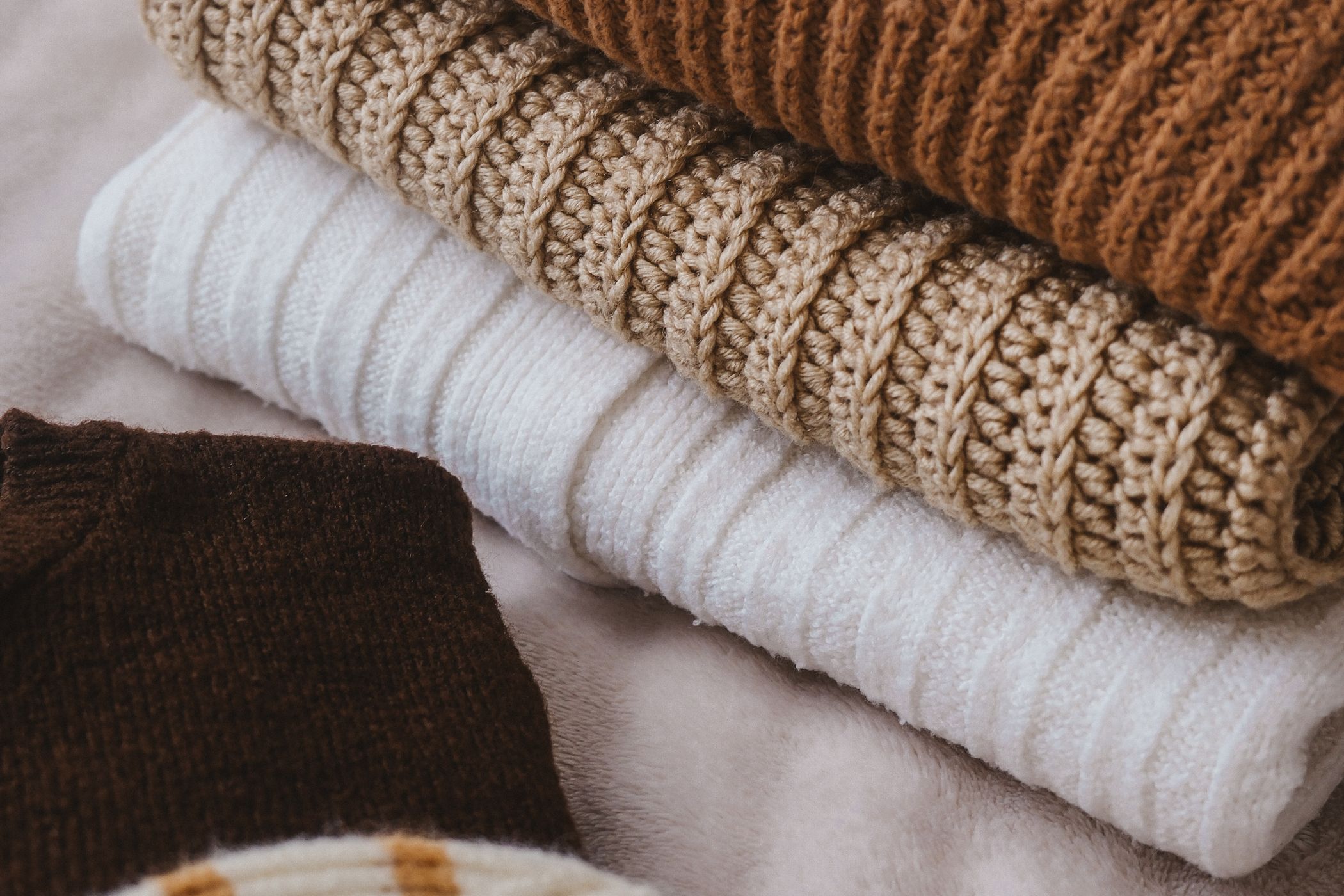
Almost every knit in a shop is labelled 100% cashmere, and almost none of them will behave the same after a winter. The label describes the animal, not the quality of what was taken from it.
Fibre length and micron
Grade-A cashmere means fibres of 34–36 mm at around 15.5 microns. Long, fine fibres twist into a yarn with fewer loose ends, which is why a good knit pills less. Short-fibre cashmere feels identical in the shop and betrays itself in week three.
Gauge
Gauge counts needles per inch. A 7-gauge knit is dense and holds structure; a 12-gauge is fine and disappears under tailoring. Neither is better — they are answers to different questions. Our Odette is 7gg, the Halden 12gg.
Ply
Ply is how many strands are twisted together. Two-ply is the sensible default for a sweater; single-ply saves money and loses shape at the elbow.
The thirty-second test
- Stretch the cuff and release — it should return, not sag.
- Rub the surface briskly with a palm. Loose fibre on your hand means short staple.
- Hold it to the light. Even stitch density means an even knit tension.
- Weigh it in your hands. A 7gg sweater under 400 g in size M has been thinned.
Price tells you about a brand's margin. Weight, gauge and ply tell you about the sweater.